
3rd Semester
Robotics & System Intelligence
Design and program intelligent robotic systems
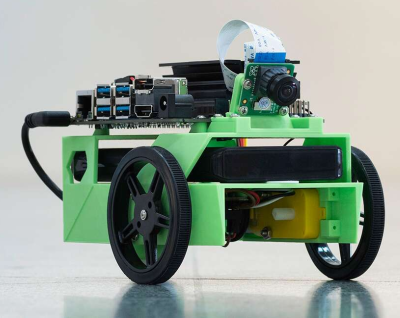
The Robotics program focuses on core robotics concepts, electronics, embedded programming, and AI-enabled robotics, with practical exposure to NVIDIA Jetson Nano for edge AI applications.
Overview
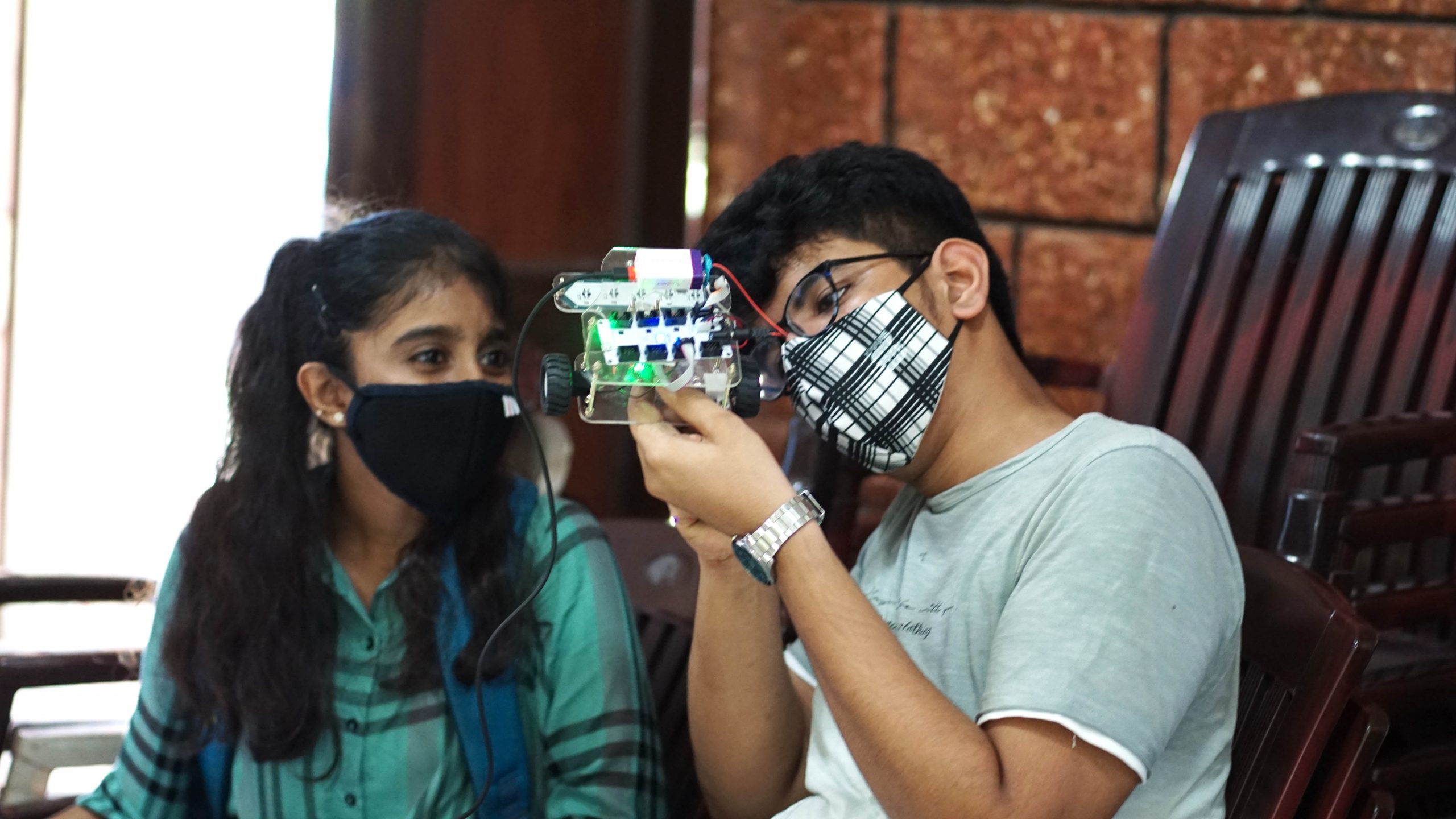
This course covers the nuances of building robotic applications. This is a completely hands-on course where students are introduced to a variety of physical and digital tools that can aid them in the process of building projects involving both hardware and software. The course is comprehensive with the use of development boards like NVIDIA Jetson Nano & Arduino UNO for computer vision and motor control capabilities, benefiting students from a variety of domains. With projects involving concepts like OpenCV, GPIO interface and Serial communication along with Arduino and Python programming language, the course touches upon all the essentials that a product developer needs to create, all in a span of 12 weeks.
Course Outcome
By the end of the course, students will be able to:
- Explain the structure and functioning of robotic systems, including mechanical, electronic, and software components.
- Design and implement basic electronic and embedded control systems using sensors, actuators, and microcontrollers.
- Program robotic motion and behavior using structured logic and control techniques.
- Apply computer vision and AI-based perception techniques using edge computing platforms such as NVIDIA Jetson Nano.
- Integrate sensor data, vision inputs, and control algorithms to enable autonomous robotic behavior.
- Build, test, optimize, and demonstrate a functional robotic system addressing a real-world use case.
Syllabus
Course Syllabus
Introduction to Robotics Systems
Week 1
Students are introduced to the fundamentals of robotics, including system components, types of robots, and real-world applications across industries. The session builds a foundational understanding of how mechanical, electronic, and software elements work together.
Electronics, Sensors & Actuators
Week 2
This week covers basic electronics concepts relevant to robotics, including sensors, actuators, and motor control. Students learn how robots sense their environment and convert signals into physical movement.
Embedded Systems & Microcontrollers
Week 3
Students explore embedded systems and microcontroller-based control architectures. The focus is on understanding hardware interfaces, input–output control, and real-time system behavior.
Programming Robotic Motion & Behavior
Week 4
This module introduces programming logic for controlling robotic motion and behavior. Students implement control structures, timing, and decision-making to enable responsive and predictable robot actions.
Intelligent Robotics & Perception
Week 5
Students are introduced to the concepts of intelligent robotics, including perception, decision-making, and autonomy. The session lays the groundwork for AI-enabled robotic systems.
NVIDIA Jetson Nano & AI Computing Basics
Week 6
Participants set up the NVIDIA Jetson Nano and learn about its operating environment. The week introduces edge AI computing concepts and how AI accelerators enable real-time robotic intelligence.
Computer Vision Fundamentals
Week 7
Students learn computer vision basics using camera inputs on the Jetson Nano. Topics include image capture, processing, and feature extraction for visual perception.
Sensor Fusion & Autonomous Behavior
Week 8
This week focuses on integrating vision data with other sensor inputs. Students learn how combining multiple data sources enables more accurate perception and autonomous decision-making.
AI-Based Robotics Applications
Week 9
Students develop robotics applications using AI-driven perception and control techniques. The focus is on applying learned concepts to real-world scenarios such as object detection, tracking, or navigation.
System Testing & Optimization
Week 10
Participants test, debug, and optimize their robotic systems for performance and reliability. Emphasis is placed on troubleshooting hardware–software integration issues.
Final Robotics Project Build
Week 11
Teams work on building and refining their final robotics project. Students integrate mechanics, electronics, embedded control, and AI perception into a cohesive system.
Demonstration & Evaluation
Week 12
The course concludes with live demonstrations of robotic systems. Projects are evaluated based on functionality, innovation, system integration, and problem-solving approach.
learning experience
What Students Take Away
- Practical robotics and embedded systems knowledge
- Experience working with NVIDIA Jetson Nano
- Understanding of AI-enabled robotics workflows
Students interested in robotics, automation, and intelligent systems.
Build robots with real intelligence.



